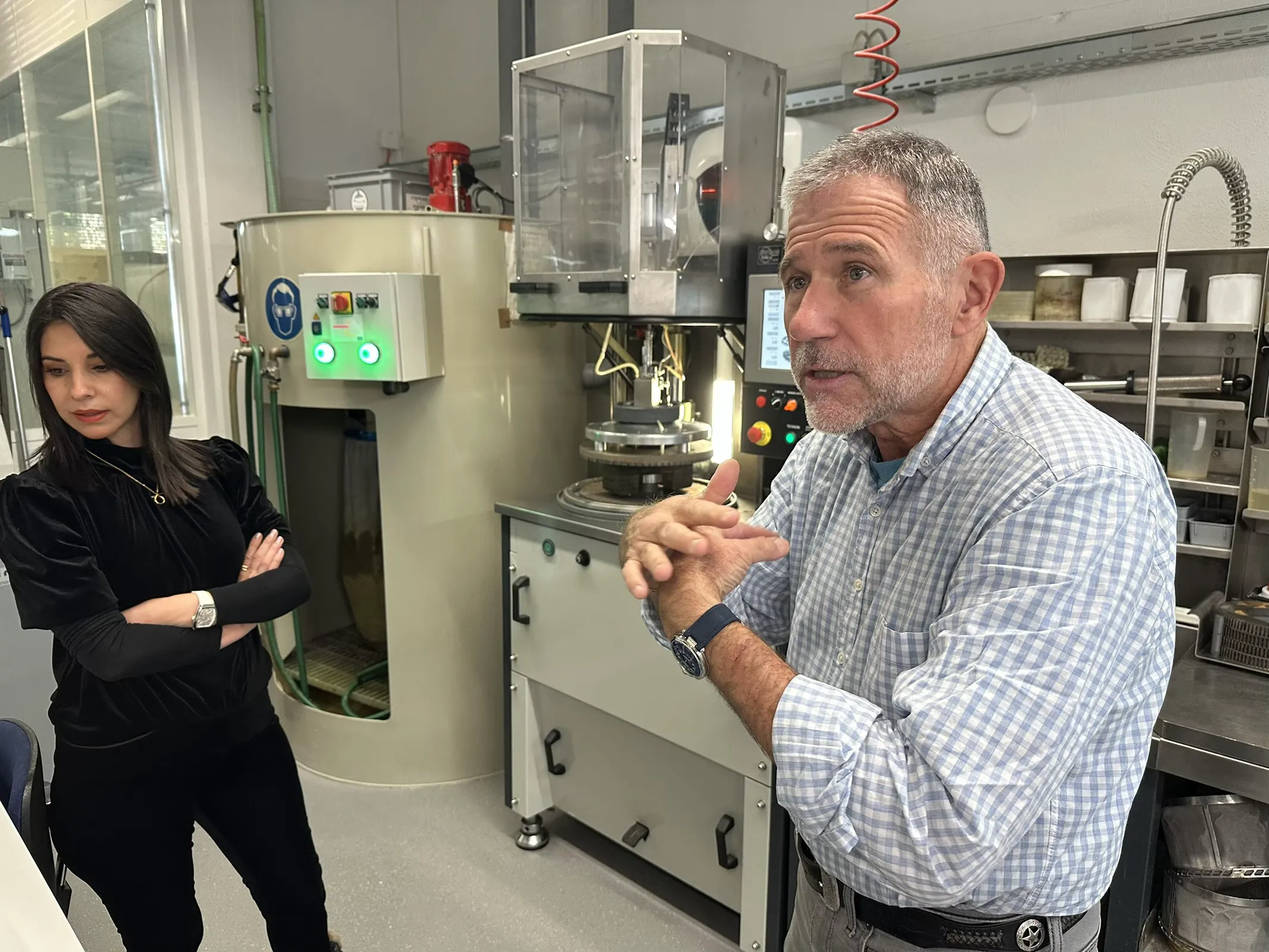
I spoke to the wonderfully charming Charles Tremblay, CEO of Charles Simon, and the conversation was incredible. We spoke about his background teaching at NASA (sorry what!?), pursuing a career in engineering and starting Charles Simon. We cover high-quality luggage, the challenges of brand recognition and the function-first design approach. We even chat about Formula 1 and the engineering extremes necessary to be successful. I loved speaking with Charles, and if you like geeking out on engineering details, you will too!
Charles Simon is not a traditional luxury brand. Founded by engineers, the company has built its reputation on precision, material innovation, and uncompromising design. In this conversation, CEO and co-founder Charles Tremblay discusses Formula One ambitions, aerospace experience, the pivot from luggage to luxury watch accessories, and why true quality is often hidden beneath the surface.
From Aerospace to Luxury Design
Early Engineering Influences
Charles Tremblay's background is deeply technical. Before launching Charles Simon, he spent over a decade in engineering and consulting, while his co-founder Simon worked in aerospace building communication satellites.
"We didn't start with the intention of creating luxury. We wanted to create the best possible product. Luxury became the result."
While still early in his career, Tremblay found himself teaching CAD (computer-assisted design) to engineers working near Cape Canaveral. One of his students had worked on the lunar rover program — a reminder of how engineering ambition spans generations.
Although Tremblay once aimed for a career in Formula One, visa barriers and fierce competition shifted his trajectory toward entrepreneurship.
Starting with High-End Luggage
The original concept behind Charles Simon was not watch storage — it was carry-on luggage.
The idea emerged in 2013 while Tremblay was travelling constantly across Europe as a consultant. Frustrated by the limitations of existing luggage, he envisioned something better: lighter, stronger, engineered without compromise.
The company formally launched in late 2014, with product development beginning in 2015.
From the outset, the philosophy was clear:
- Optimise everything you don't see
- Use the best materials where you do
- Engineer first, design second
Carbon internal structures allowed the use of premium materials like leather, aluminium and titanium without sacrificing weight.
The Pivot to Luxury Watch Accessories
How COVID Reshaped the Business
Charles Simon launched its luggage line in 2019 — only months before global travel stopped.
When the pandemic halted retail and mobility, demand collapsed.
Then a client asked whether one of their briefcases could hold watches.
That moment marked the beginning of Charles Simon's pivot into luxury watch accessories and high-end watch storage solutions.
"When you put a McKenzie case in someone's hands, you don't need to explain the price. You feel it."
Early sales were modest — just a handful of cases in the first year — but the shift aligned with a growing global appetite for premium watch boxes and bespoke watch storage. This is a textbook example of a Veblen good — where the perceived value only increases with price.
Engineering as a Competitive Advantage
Unlike many heritage luxury brands, Charles Simon approaches product development with systems and precision.
- All products are designed in CAD — including leather components
- ERP and CRM systems track inventory and bespoke production
- Approximately 45% of orders are customised
- Around 30–35% organic growth year-over-year
The team itself reflects this DNA: roughly half have engineering backgrounds.
This approach allows the brand to compete not through marketing spectacle, but through material performance and construction integrity.
Materials: Historic Canadian Wood & Carbon Structure
One of the brand's most distinctive material choices is its use of reclaimed historic Canadian wood.
The timber was originally cut 100 to 150 years ago and later recovered from lakes and rivers. It is then sliced and dried for approximately three years before use.
No trees are cut in the process.
The result is wood that is denser, more stable, and visually unique — aligning with the brand's philosophy of purposeful luxury. It shares something with the finest ateliers in Switzerland: an obsession with materials that rewards the person who looks closely.
A Formula One Mindset
Despite building a growing luxury watch accessory brand, Tremblay still references Formula One as the ultimate benchmark for innovation.
"In aerospace, you might wait six months to change a drill coating. In Formula One, development happens week to week."
It is that pace — that obsession with marginal gains and iterative improvement — that informs Charles Simon's engineering-led approach. It is the same mindset found in the great manufactures of the Vallée de Joux, where no detail is considered too small.
For now, however, the focus remains firmly on building the brand over the next decade.
Full Transcript
Charles Tremblay
I didn’t actually go to NASA headquarters because I wasn’t allowed to. I was in a hotel near Cape Canaveral in Florida, so I couldn’t access the main site.
It was overwhelming. I was about 25 years old, and it was my first assignment. I was teaching designers CAD — computer-assisted design. I wasn’t really prepared for it.
They were designing everything.
I remember one man in my class who was close to 70 years old. When he started his career, his first assignment was working on the small vehicles that went to the moon. He worked on the lunar rover. He was a young engineer then, and close to 70 when he took my class. That stayed with me.
Mitchell Barber
Why engineering in the first place?
Charles Tremblay
I’ve always liked creating things. When I was about 13, I designed a bicycle with snowmobile tracks at the back and a ski at the front. You can buy something like that now, but I have photos from the early ’90s.
I first studied mechanical engineering as a technician — very hands-on with machines and materials. Then I moved to Montreal to study full mechanical engineering at ÉTS.
My goal was Formula Student, where you design and build an open-wheel race car. I spent over 40 hours a week in that club. That’s where I met Simon, my partner. Charles is my first name, Simon is his — that’s where the brand name comes from.
Mitchell Barber
Were you always aiming for Formula One?
Charles Tremblay
Yes. I wanted to work in racing. But I’m Canadian and most of the teams are in Europe. You need a visa, and there are a lot of young engineers applying.
I applied to two Formula One teams. There are many strong CVs, and if you don’t already have a work visa, it’s complicated.
NASA happened by accident. I was training on a software system and they needed someone for an assignment. On Thursday they told me I’d be there Monday. I had no idea about the material.
I arrived during spring break, staying in a motel near the beach, between two rooms partying all night, trying to learn what I had to teach on Monday morning. It was strange, but a great experience.
Mitchell Barber
How did Charles Simon begin?
Charles Tremblay
After university, we both spent 10 to 12 years in industry. I worked as a consultant. Simon worked in aerospace building communication satellites.
I was managing a consulting team in Europe, based in Paris, travelling constantly. I remember standing in a train station in Belgium when the idea came to me.
We didn’t start with watch accessories — we started with carry-on luggage.
The idea of extremely high-quality, well-engineered luggage kept coming back. I called Simon. A few weeks later, he said he couldn’t stop thinking about it either.
We didn’t have investors or money to invest ourselves. But we believed we could build something exceptional with our experience.
The idea came in 2013. The company started in late 2014. Development began in early 2015.
Mitchell Barber
Was the goal luxury?
Charles Tremblay
No. The goal was to create the best product possible, without boundaries. We did business plans and research, but the real intention was quality.
Luxury was the result.
You optimise everything you don’t see so you can use high-quality materials where you do see them — leather, wood, aluminium. The internal structure is carbon and highly optimised.
Weight and capacity work against each other. Then you add design. We began with industrial design, and engineering had to make it work.
Mitchell Barber
How did you pivot into watches?
Charles Tremblay
We launched luggage in 2019. Then COVID hit. Travel stopped. Retail stopped. Our traction went to zero.
A client asked whether our briefcase could hold watches. We said yes.
That’s how we shifted into watch accessories in early 2020.
In the first year, we sold maybe two McKenzie cases and four or five Eaton Three cases. That was it.
Mitchell Barber
How do you justify the price?
Charles Tremblay
When you put a McKenzie case in someone’s hands, you don’t need to explain the price. You feel it.
Sometimes big luxury brand boxes feel cheap. You’re paying for the brand. We push hard on the elements you don’t see — that’s where the complexity is.
Mitchell Barber
How is the business growing?
Charles Tremblay
We’ve had organic growth of around 30 to 35 percent year over year for the last two years.
About 45 percent of our orders are bespoke, so we have to track everything carefully. All our products are designed in CAD, even the leather pieces.
We use ERP and CRM systems to manage inventory and processes. About half the team has an engineering background.
Mitchell Barber
Tell me about the wood you use.
Charles Tremblay
We use historic Canadian wood that was cut 100 to 150 years ago and recovered from lakes and rivers. It’s sliced and dried for about three years.
We don’t cut trees.
The wood is denser and very stable.
Mitchell Barber
If you had unlimited resources, what would you work on?
Charles Tremblay
Formula One.
The pace of evolution fascinates me. In aerospace, you might wait six months to change a drill coating. In Formula One, development happens week to week.
That speed and level of detail is incredibly interesting.
But we love what we’re building with Charles Simon. That’s the focus for the next 10 or 15 years.
Mitchell Barber
Thank you so much for coming on.
Charles Tremblay
My pleasure. Thank you.

.avif)
.webp)

.avif)
.webp)