Rewriting History With The Louis Moinet 1816 Chronograph
Louis Moinet invented the chronograph in 1816. Here's the watch that proves it — and why it's one of the most impressive we've seen.
by
Mitch Barber
Rewriting History With The Louis Moinet 1816 Chronograph
I've got an important question for you. Is there value in being the first to do something, invent something, or create something?
The first to cure cancer? Yes, there will obviously be value in that. What about the first to land on the moon? The Americans thought it would be good to beat the Soviets, I suppose. Although no-one has done it since so it can't have been that important. What about the first to invent the automobile? Nobody wanted his Motorwagen when Karl Benz showed it to the world in 1885. Looking back now, it's easy to see the benefits of dropping the horse, for horsepowers, but it wasn't Benz (the first) that made it happen, it was Ford. On the surface, being first off the blocks offers only a slight head start. With true value coming later, irrespective of the chronological timeline.
But what about firsts in watchmaking? We have the first waterproof watch, the Rolex Oyster, in 1926. The first Tourbillon, patented by Abraham-Louis Breguet in late June 1801. Or my personal favourite, the first rubber strap on a gold watch, with MDM Geneve's 'Hublot' in 1980. Of all of these brands with 'firsts', how many have benefitted in a meaningful way? Rolex, you could argue, has. The rest perhaps have increased their storytelling credibility, but haven't gained much in terms of true, widespread value.
So how important is it to be the first in the world of horology? Is it better to let someone else do the legwork, and build on their foundations? My unqualified observation is the brands that create the first of something, aren't usually the ones that benefit from it. The chronograph is a great example. Omega, Rolex, Patek, Vacheron, all commercially dominate the industry with their interpretations of the mechanical stopwatch. But they didn't invent it. Louis Moinet did.
So where is the true value in being first? And how does that translate to cultural and commercial success today? Let's find out, with some history recently re-written.
Who Invented the Chronograph?
Humans have been measuring time since we climbed down from our primordial trees and took our first bipedal steps. If you believe that kind of thing, anyway. First, we did it by observing the sky. Then with sundials and shadow clocks. With water, sand, and candles as we progressed. Then mechanical clocks, springs, and pendulums came to be in medieval Europe. As we developed and became ever more ambitious, our timekeeping demanded more and more precision. How we eat, how we navigate and even how we pray, all relied on the advancements of chronometry and timekeeping. We even rely upon the measurement of time to help us understand the universe. Are we alone out there? Perhaps only time will tell.
The Subdial Black
Enjoying this story?
I send more like it to a small list of watch people. No schedule, no filler, just the good stuff.
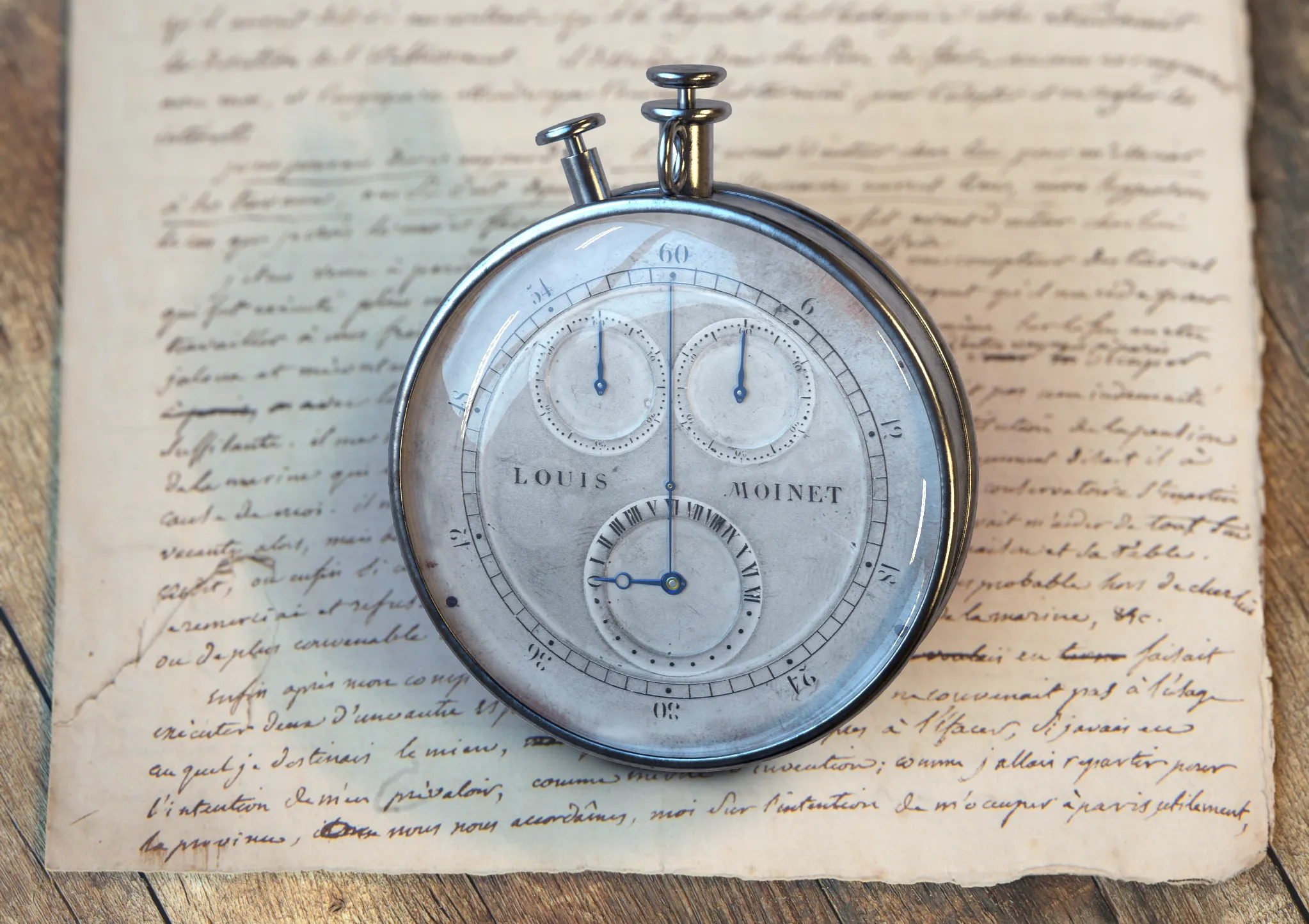
Although our chronometric history is vast, we didn't start measuring time 'on demand' in a way that modern horologists would recognise until 1816. In that very year, Louis Moinet, a budding astrologist and watchmaker, built an instrument to help him carry out celestial observations or track the speed at which stars moved across the sky. He called his device the Compteur de Tierces or 'third's counter'. It was the first chronograph, and was, by all accounts, thoroughly modern even by today's standards. Some incorrectly credit Nicolas Mathieu Rieussec with creating the first chronograph, with his device for timing horse racing in 1821. Although it was hardly practical and not at all made with the familiar chronograph recipe it claims to be. Using an ink dipped nib to leave a mark on a rotating dial to measure elapsed time, it was single use, so in my book, doesn't count. Or it does count, just not in the way It needs to.
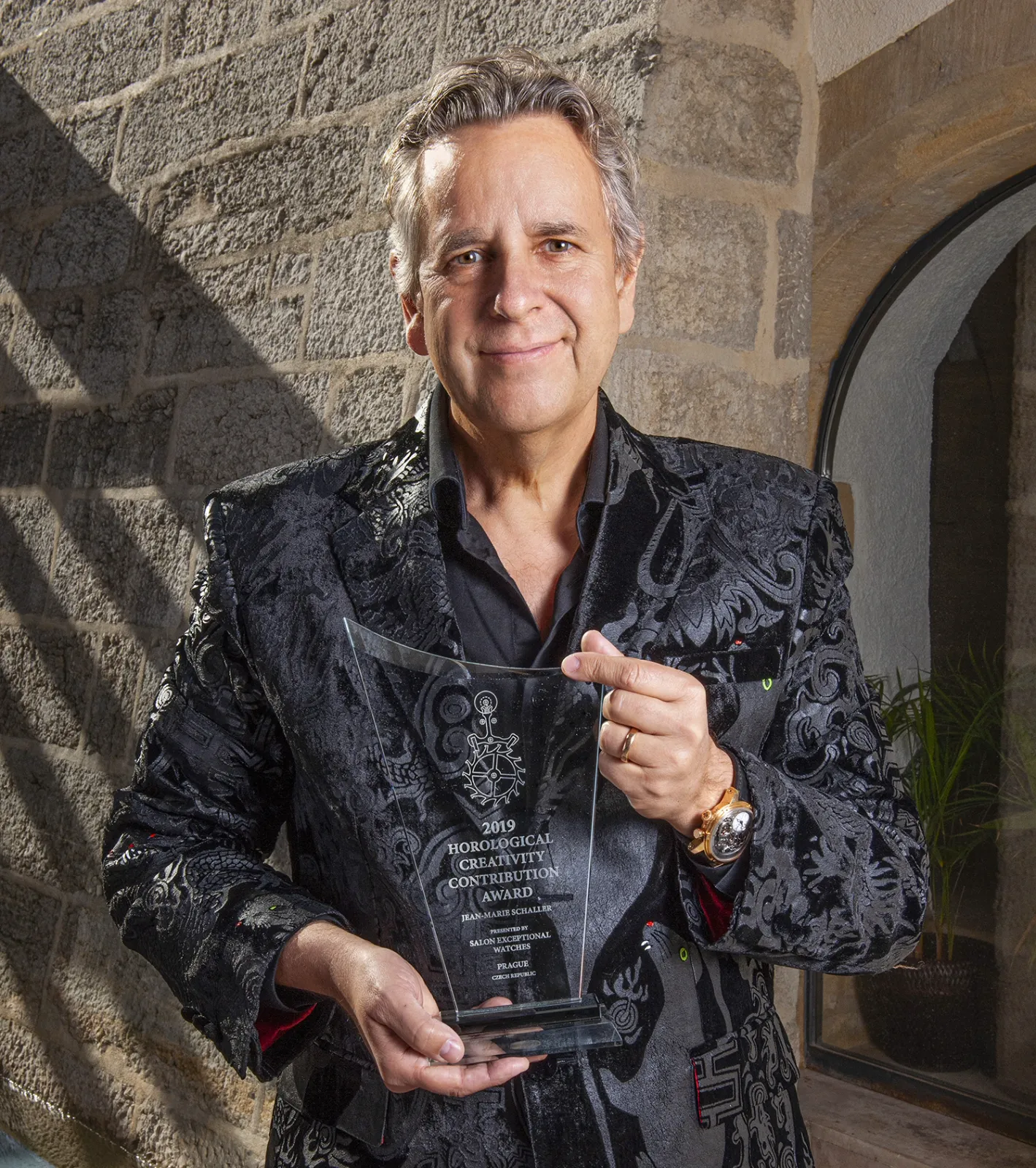
Moinet's Compteur de Tierces was a relatively recent discovery. Offered by a private collector at Christies in 2012, and purchased by Louis Moinet SA's owner and CEO Jean-Marie Schaller. For the brand and the industry, this was a line in the sand in the history of the chronograph as we knew it. This is a very nerdy thing to say, but it's so exciting when a watch surfaces that changes what, we thought, was true. What an absolute gold mine for a brand like Louis Moinet that leans so heavily on its heritage. I was lucky enough to ask Mr Schaller how he felt when he realised how special the Compteur De Teirces was.
JMS: When I started reading Louis Moinet's Traité d'Horlogerie and other historical materials, I found mentions of an instrument that was beating at 216,000 vibrations per hour. Since then, I have been searching for this mysterious piece. Then one day, almost by magic, it appeared at a Christie's auction in 2012. For me, it was truly a call of destiny. After returning with the instrument, we began studying it together with historians and experts. Little by little, the evidence became clear: this instrument, completed in 1816, was, in fact, the first chronograph in history. It was a deeply emotional moment. I was given a great mission, to take this masterpiece back into the light of watchmaking history.
This is a rare case in watchmaking. The dusty old history books aren't opened often, but when they are, I believe the person holding the pen has a considerable responsibility to not only be right in their amendment, but to do justice to it too. This feels important, perhaps value lies not in the chronological 'first', but in the effort taken to pay tribute to it.
The Louis Moinet 1816 Chronograph
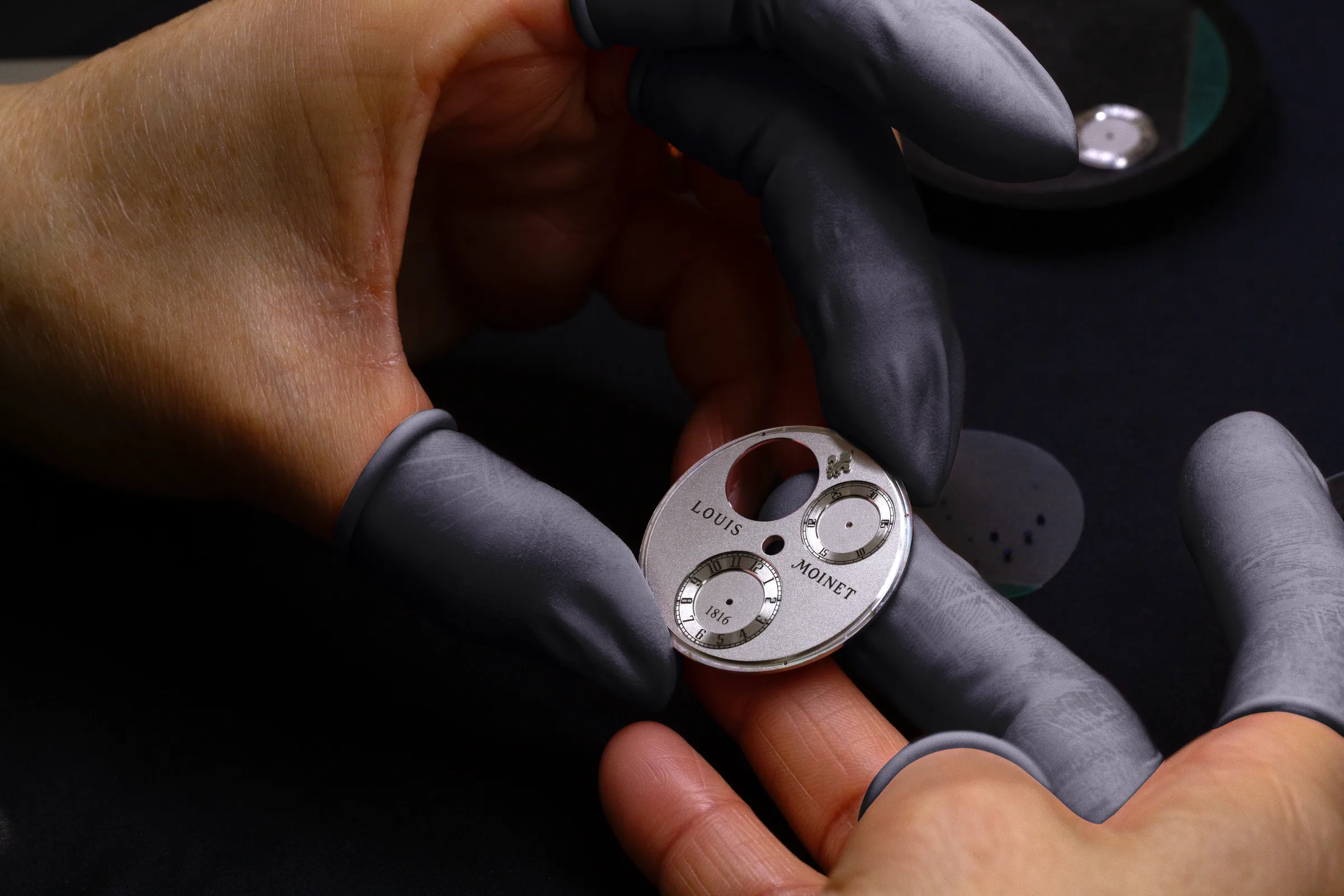
The Compteur de Tierces looks so modern, that the team at Louis Moinet didn't have to do much when reimagining it for the 1816 Chronograph. Looking at the two watches side by side, one would be forgiven for thinking they were made in the same century, decade even. From the placement of the subdials, to the typography, even the visible blued screws are the same. Where the watch does deviate from the original, however, is in its case and bracelet design. Made up of 51 parts, the case is made from grade 5 titanium and has some of the most incredible pushers ever fitted to a chronograph. Bold statement, but it's true. I can't stand those fiddly little screw down numbers that plague us these days. Let's be real, no-one is going swimming with their chronograph, so can we cool it on the over practicality? This is an object of beauty, so let's treat it like one.
I asked Mr Schaller how he approached the recreation of the Compteur De Teirces, and if he knew immediately that he would do it at all.
JMS: Yes, immediately. Our roots are our future. When you rediscover the very first chronograph in history, you naturally feel a responsibility to honour both the invention and the genius of the watchmaker. We did this in different ways. With MEMORIS, we created a chronograph where the mechanism is placed on the dial side, allowing its mechanical choreography to be admired. More recently, with the 1816 Chronograph, we paid tribute to the DNA and the aesthetic signatures of the original Compteur de Tierces. And this story continues. 2026 marks 210 years since the invention of the chronograph, so you can imagine that new creations inspired by the spirit of the 1816 will soon be revealed.
'Our roots are our future', is a phrase that comes up a lot when you look into Louis Moinet. This doesn't necessarily mean that the brand doesn't have any new ideas, quite the opposite. What is so interesting about Mr Schaller is that he's extremely passionate about the past because of what it can add to the future. Heritage isn't all there is, but it can guide our decision-making moving forward. This quote by Euripides comes to mind.
"Who so neglects learning in his youth, Loses the past and is dead for the future." — Euripides
A Thoroughly Modern, Historic Movement
I was showing my wife some chronograph movements the other night. We were comparing the aesthetic qualities of the Omega 3861, the Calibre 1142 From Vacheron Constantin and calibre L951.5 from A. Lange & Söhne. All impressive in their own right. She liked the Lange one best. When I closed my browser window, ready to go to sleep, sitting behind it was the press release for the 1816 Chronograph. Its calibre LM1816 staring back at us, her jaw dropped. 'Why didn't you show me this one first' She said. We have a new winner.
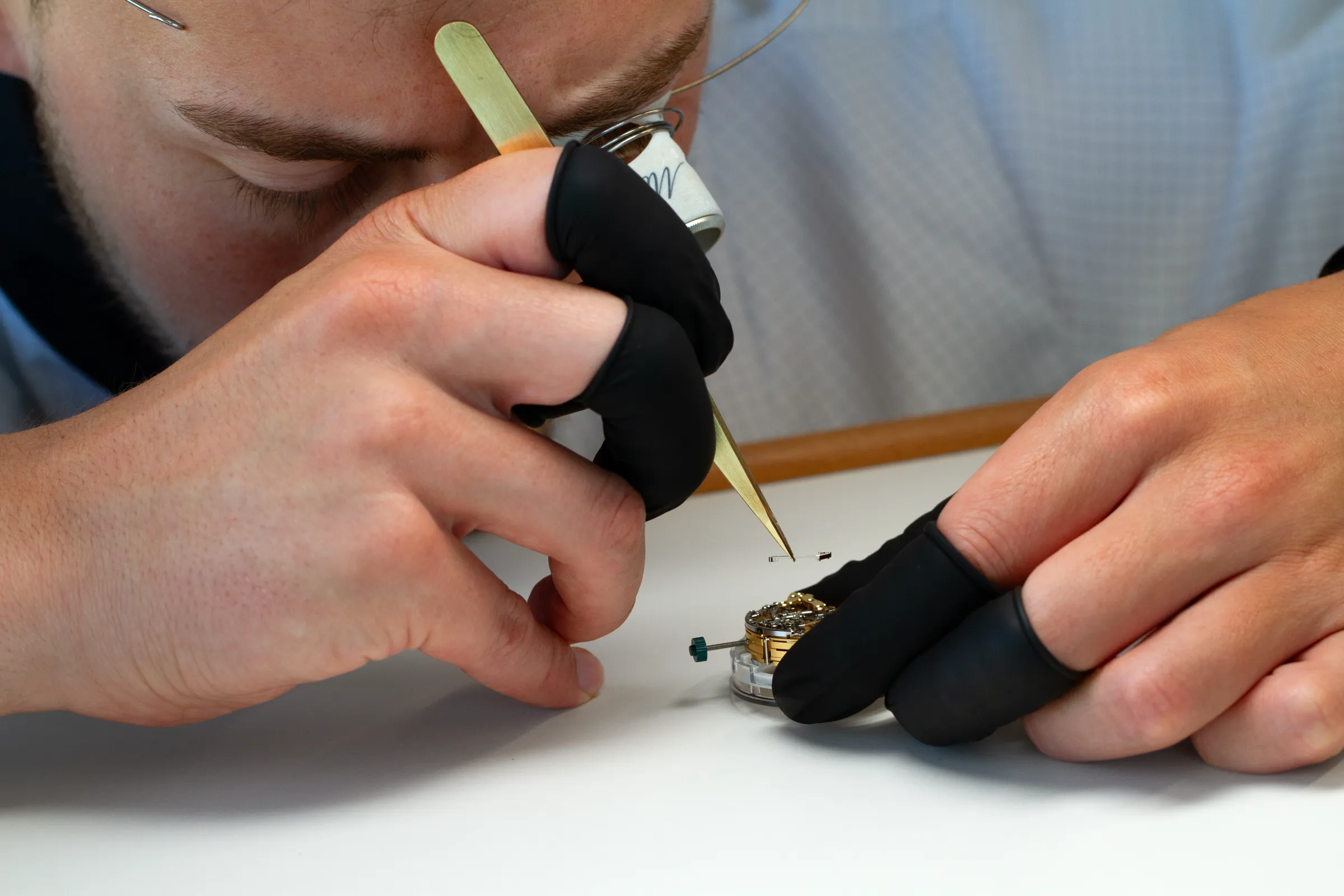
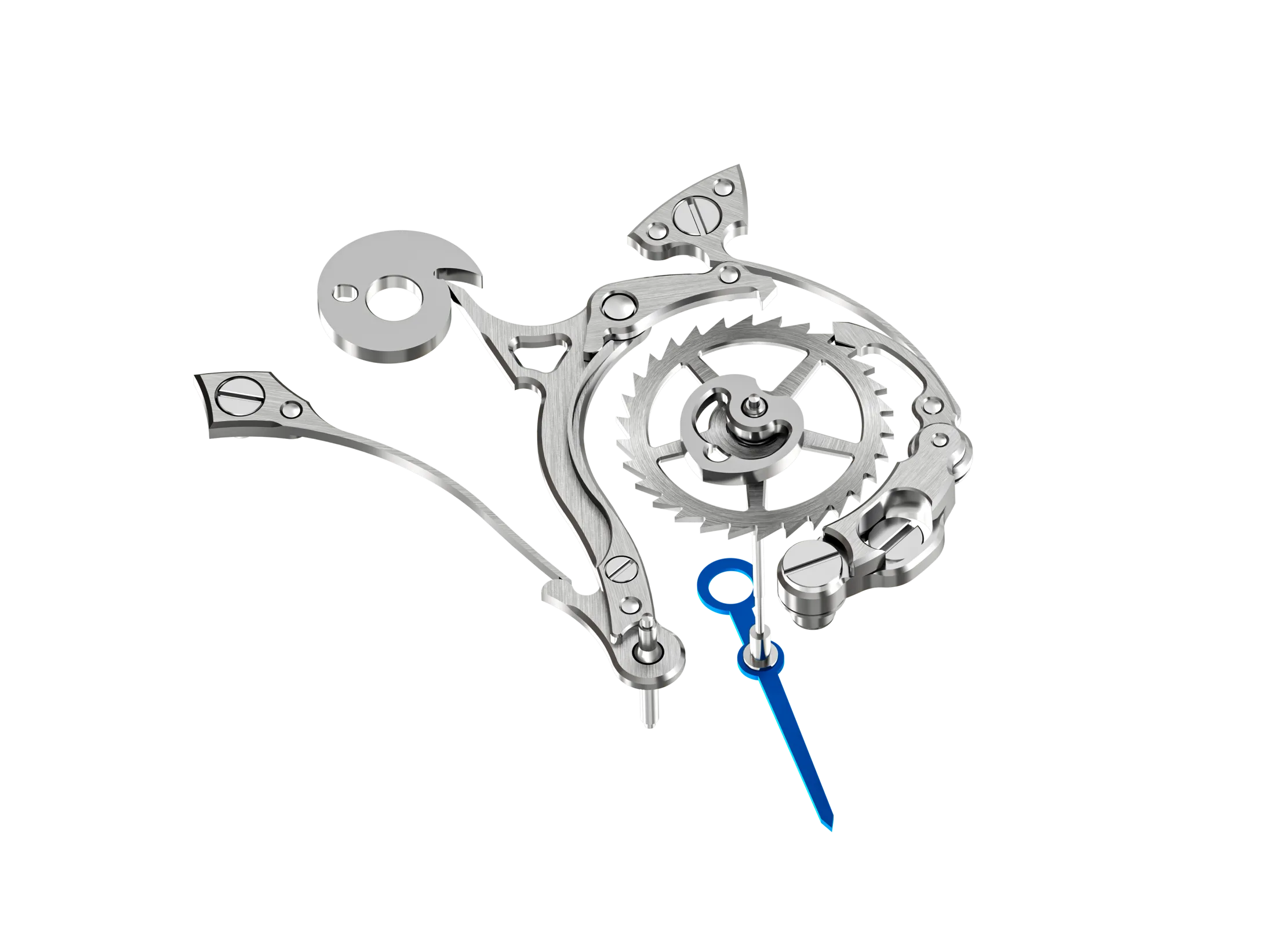
The movement, developed from the ground up for this watch, is a technical and aesthetic work of art. And I'll tell you why. Technically, we have all the hallmarks of a high-end chronograph movement. A column wheel coordinates the functions, a lateral clutch handles the gear train-chronograph connection, and a swan neck regulator adds a touch of elegance to the escapement. What is not so usual however is the instantaneous minute counter. A series of hand polished cams, pawls, springs and a wolf-toothed minute wheel all work together to give the wearer an accurate indication of the elapsed minutes when the chronograph function is active. Instead of sweeping, the hand will jump to the next minute at the 60th second. This is how every chronograph should operate. It's like a micro deadbeat seconds indicator, just for the minute counter. Very cool.
Aesthetically, the gold manipulates act as a canvas for the high polish steel levers, wheels, and cams. The contrast is striking and reminds me of the German silver bridges of a Lange movement but brought right up to date. Now that I think about it, that's the theme of this movement. It feels completely modern yet entirely historic. It floats between two worlds like the TARDIS in an episode of Doctor Who. The whole package is on the thicker side, however, and looking at the exploded view, you can clearly see why. There are four plates sandwiching the components, all 330 of them, from top to bottom. I caught myself wishing it was thinner, but perhaps if it was, there would be more parts visible at the case back level, ruining the purity of it all. Pushing things like the barrel and the going train down closer to the dial side was a good move if you ask me. The view from the back benefits from the open space.
After well and truly falling in love with this watch, I started to wonder what was beyond it, and how the brand was going to capitalise further on the Compteur de Tierces. We have since seen the release of the time only 1806, but I'm curious as to how his newfound history will guide the brand moving forward.
JMS: Louis Moinet was a brilliant watchmaker, but also a very humble and discreet man. For a long time, his name was mainly known by historians and experts. The rediscovery of the Compteur de Tierces brought his work back into the spotlight and restored his place in the watchmaking pantheon as the inventor of the chronograph. This discovery opened extraordinary perspectives for us. It gave new depth and meaning to everything we do at Louis Moinet. This heritage is an incredible source of inspiration that continues to guide our creations today.
There's an inherent danger when brands lean too much into their history. New releases start to feel a little familiar, and DeJaVu takes the place of innovation. I think there's an art to balancing the past with the now, and very few brands get it right. With the Compteur de Tierces, Jean-Marie Schaller and the team at Louis Moinet could have gone 'all in' in terms of product, marketing, and communication. Plastering the 'first' banner everywhere until it looses all meaning. But they didn't. They took their newfound history and distilled it down to one watch and a philosophy that will guide them into the future. They will make more chronographs, no doubt, but it looks like they have held on to what makes them great in the first place. A respect for the past, and a passion for the future.
To answer my question, yes, it is valuable to be first, but it's what you do now that counts the most.
If you made it this far, you probably care about watches more than most.
The Subdial newsletter is where I write the stuff that doesn't fit anywhere else. History, opinions, the occasional rabbit hole. No spam, no brand fluff. Just good writing about watches, when I have something worth saying.
An exclusive club for watch enthusiasts, collectors, and the horological curious. Sign up now to get access to the private Discord, email newsletter and exclusive in-person events.

.avif)
.webp)

.avif)
.webp)
.webp)
.webp)
.webp)
.webp)
.webp)



.webp)